


No products in the cart.
- Blog
- Grades & specs
- Oxidized Bitumen (Blown Grade): Grades, Applications and Handling for Industrial Use
Oxidized Bitumen (Blown Grade): Grades, Applications and Handling for Industrial Use
Grades & specs

Saniya MirzaBlack Rock Bitumen · Dubai, UAE
4 min read
Table of contents
While paving-grade bitumens (such as 60/70 or VG-30) are engineered for viscoelastic flexibility and rut resistance under dynamic traffic loads, industrial manufacturing demands a completely different set of physical properties: high thermal stability, minimal temperature susceptibility, elevated softening points and permanent water resistance.
This is achieved through oxidized bitumen, commonly called blown bitumen or blown grade bitumen. For industrial buyers, waterproofing contractors, roofing membrane manufacturers and pipeline engineers, understanding the physical transformation that occurs during oxidation is critical for selecting the correct grade.
What Is Oxidized Bitumen and How Is It Produced?
Oxidized bitumen is manufactured by passing pre-heated air through a soft bitumen feedstock (typically vacuum bottom residue) in a blowing column at temperatures from 200°C to 280°C.
Process flow: vacuum bottom residue → pre-heater (200°C to 280°C) → blowing tower with pressurized air injection (dehydrogenation and polymerization) → oxidized / blown bitumen.
The Chemistry Behind Air Blowing
The air-blowing process triggers two key chemical reactions:
- Dehydrogenation: oxygen reacts with hydrogen in the lighter hydrocarbon molecules (maltenes) to form water vapor.
- Polymerization: the maltene fraction combines into higher-molecular-weight aromatic structures known as asphaltenes.
As the asphaltene content increases, the bitumen transitions from a fluid sol-type structure to a rubbery gel-type structure. The resulting material has a significantly higher softening point, lower penetration value and reduced temperature susceptibility compared to standard paving grades.
Decoding Oxidized Bitumen Nomenclature
Oxidized bitumen grades are designated by two numbers separated by a slash: Grade SP/Pen.
- First number (SP): target softening point in °C, measured by the Ring and Ball test (ASTM D36).
- Second number (Pen): target penetration value in tenths of a millimeter (0.1 mm at 25°C, ASTM D5).
Common Commercial Grades and Specifications
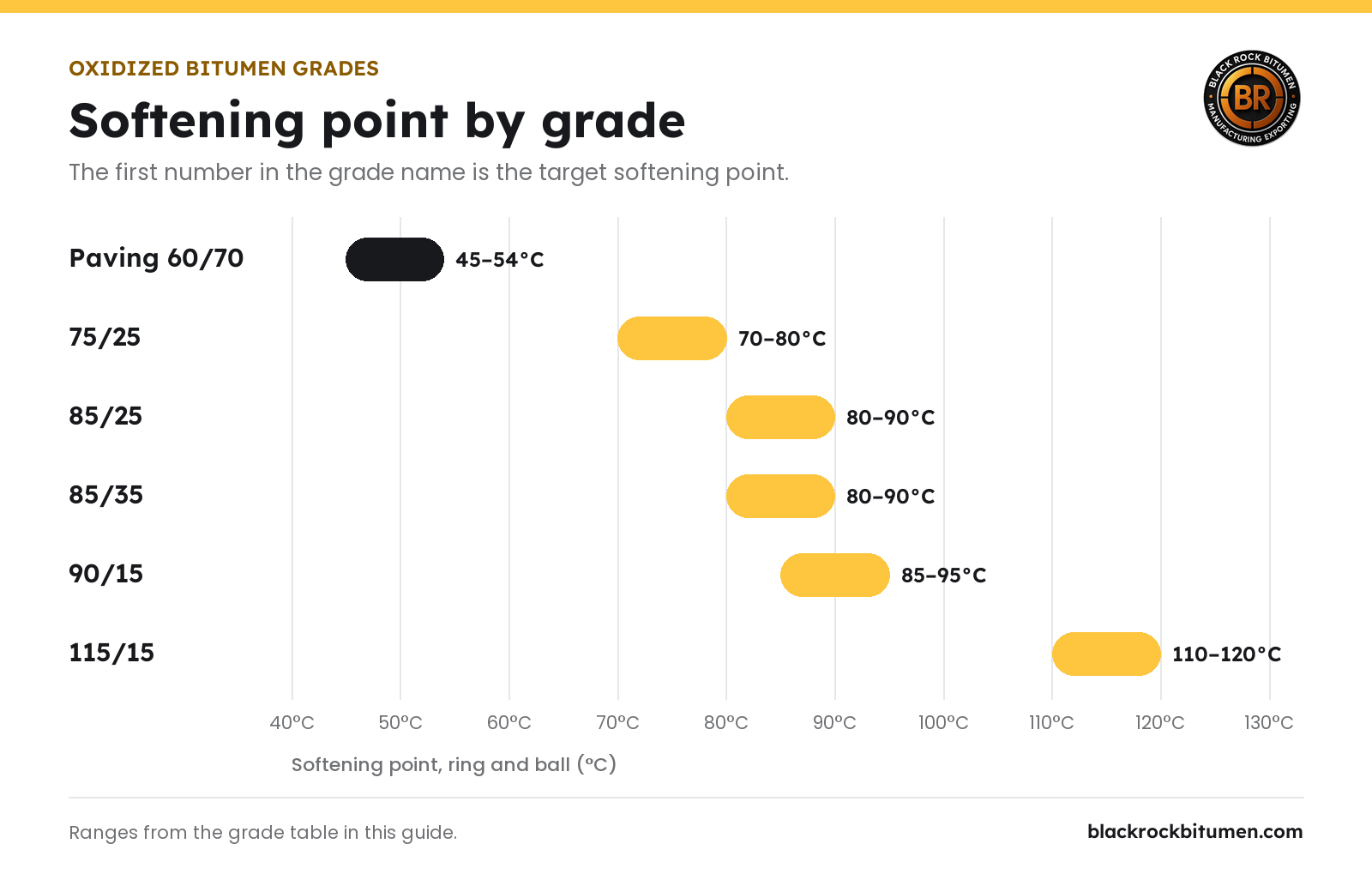
| Physical Property | Grade 75/25 | Grade 85/25 | Grade 85/35 | Grade 90/15 | Grade 115/15 |
| Softening point (°C) | 70-80 | 80-90 | 80-90 | 85-95 | 110-120 |
| Penetration at 25°C (0.1 mm) | 20-30 | 20-30 | 30-40 | 10-20 | 10-20 |
| Loss on heating (%, max) | 0.2 | 0.2 | 0.2 | 0.2 | 0.2 |
| Flash point (°C, min) | 250 | 250 | 250 | 250 | 260 |
| Solubility in trichloroethylene (%, min) | 99.0 | 99.0 | 99.0 | 99.0 | 99.0 |
Key Industrial Applications
| Application | Preferred Grades |
| Roofing membranes and shingles | 85/25, 85/35, 90/15 |
| Waterproofing and built-up roofing | 75/25, 85/25 |
| Pipeline enamels and coatings | 90/15, 115/15 |
| Joint fillers and sound dampening | 90/15 |
1. Bituminous Roofing Membranes and Shingles
In roofing manufacturing, bitumen must withstand direct sunlight without melting, slumping or running off pitched surfaces in summer, while avoiding cracking under freezing winter conditions.
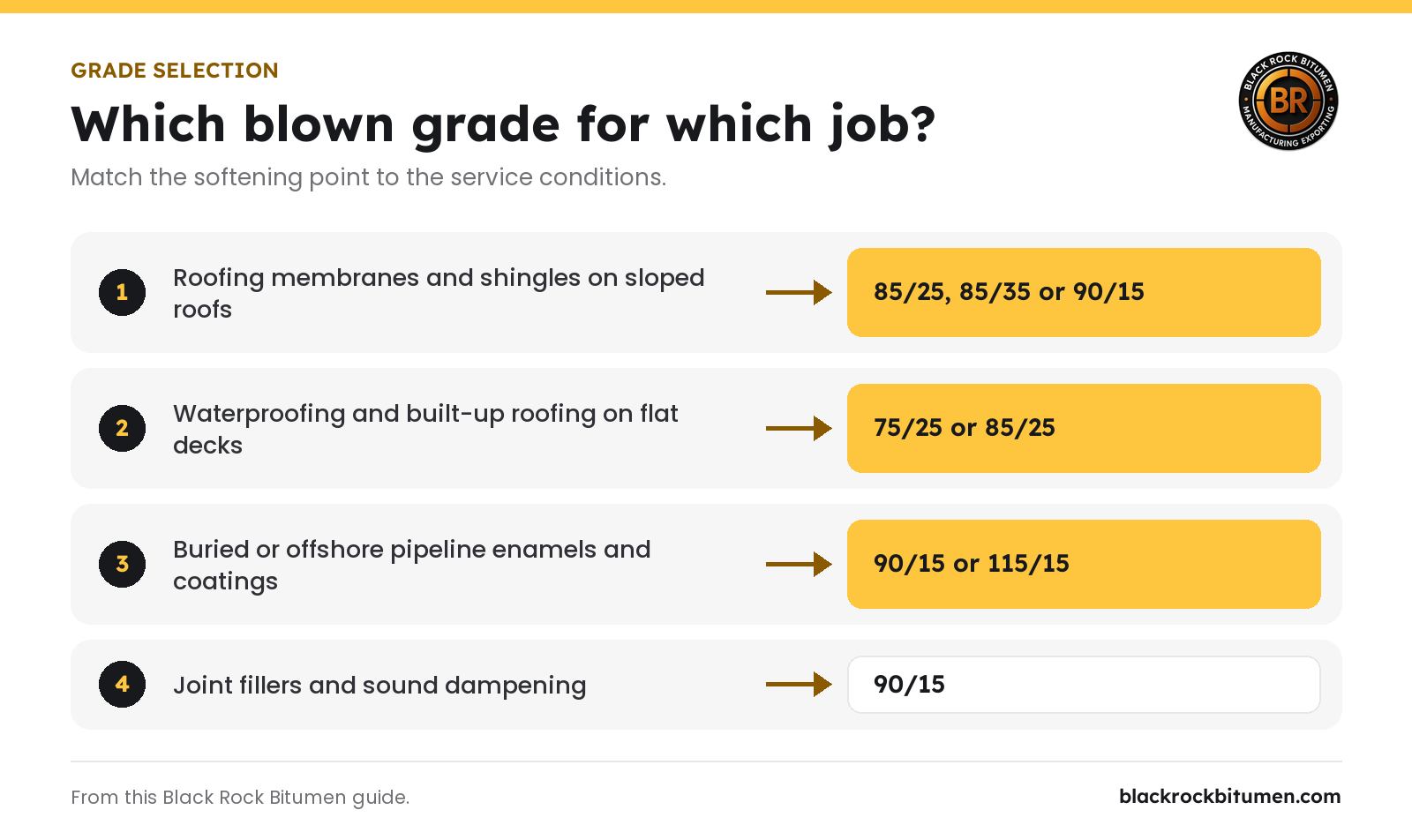
- Preferred grades: 85/25, 85/35 and 90/15.
- Role: primary saturant and coating compound for fiberglass or polyester mat reinforced APP/SBS modified roofing felts and asphalt shingles. The high softening point (above 85°C) ensures dimensional stability on sloped roofs.
2. Waterproofing and Built-Up Roofing (BUR) Systems
Built-up roofing systems use multiple plies of bituminized felt bonded with hot-applied blown bitumen to form a seamless, monolithic waterproofing barrier on flat concrete decks and subterranean structures.
- Preferred grades: 75/25 and 85/25.
- Role: provides low permeability, chemical resistance to groundwater salts and self-healing properties against minor mechanical punctures.
3. Underground Pipeline Anti-Corrosion Coatings
Steel oil, gas and water pipelines buried underground or submerged offshore require robust protection against soil chemicals, galvanic corrosion and moisture ingress.
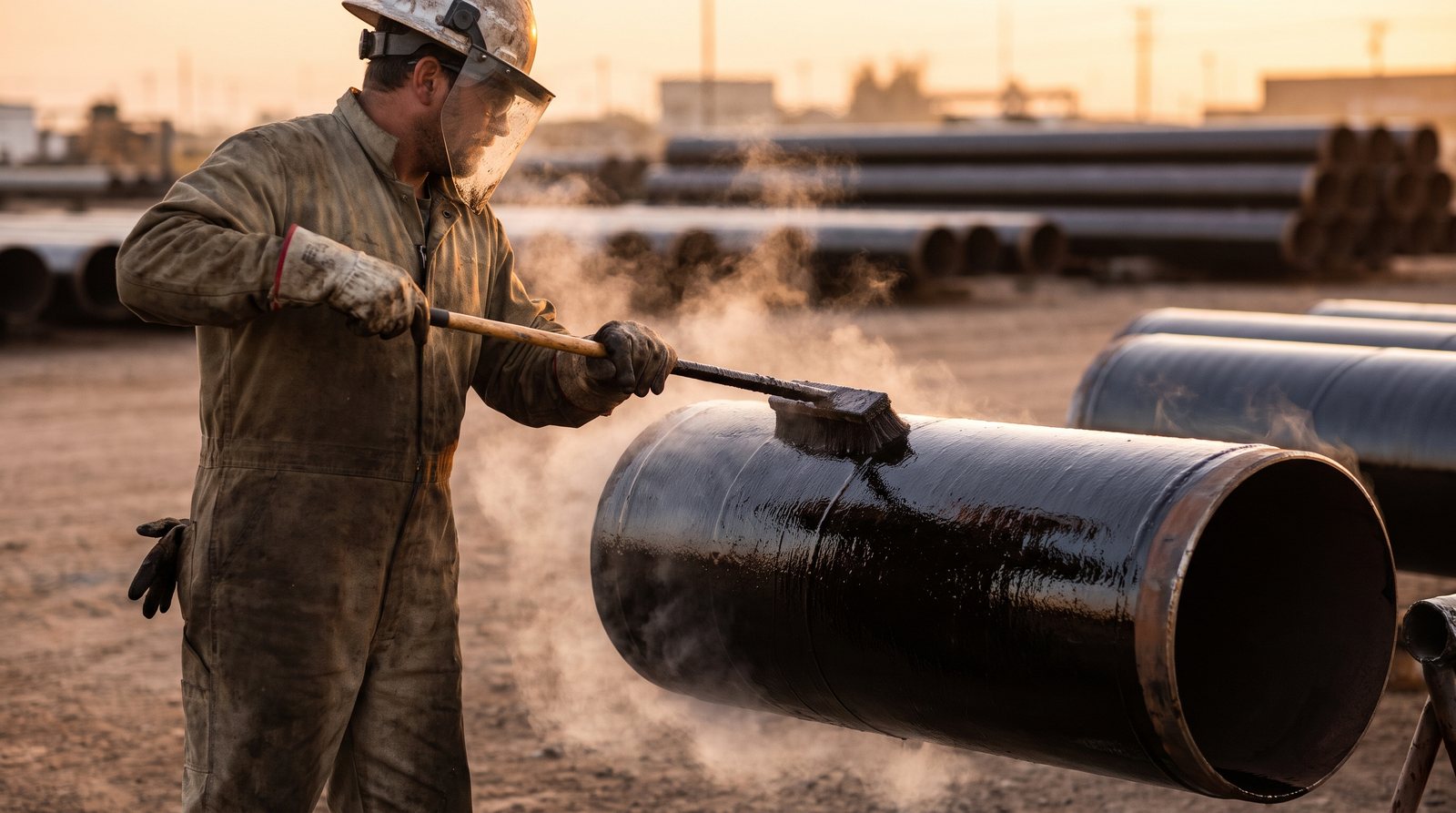
- Preferred grades: 90/15 and 115/15 (often formulated into enamel coatings mixed with inert mineral fillers such as limestone or slate flour).
- Role: delivers high electrical resistivity, high cathodic disbondment resistance and mechanical adhesion to primer-coated steel pipes. The low penetration value (10 to 20 dmm) prevents soil stress from indenting or peeling the coating layer.
4. Pavement Expansion Joint Fillers and Electrical Cable Compounds
- Preferred grade: 90/15.
- Role: formulated into hot-poured joint sealants for concrete pavements and bridge deck joints, and into potting compounds for electrical cable junction boxes where non-conductive, water-impermeable sealing is required.
Oxidized Bitumen vs Paving Grade Bitumen: Technical Comparison
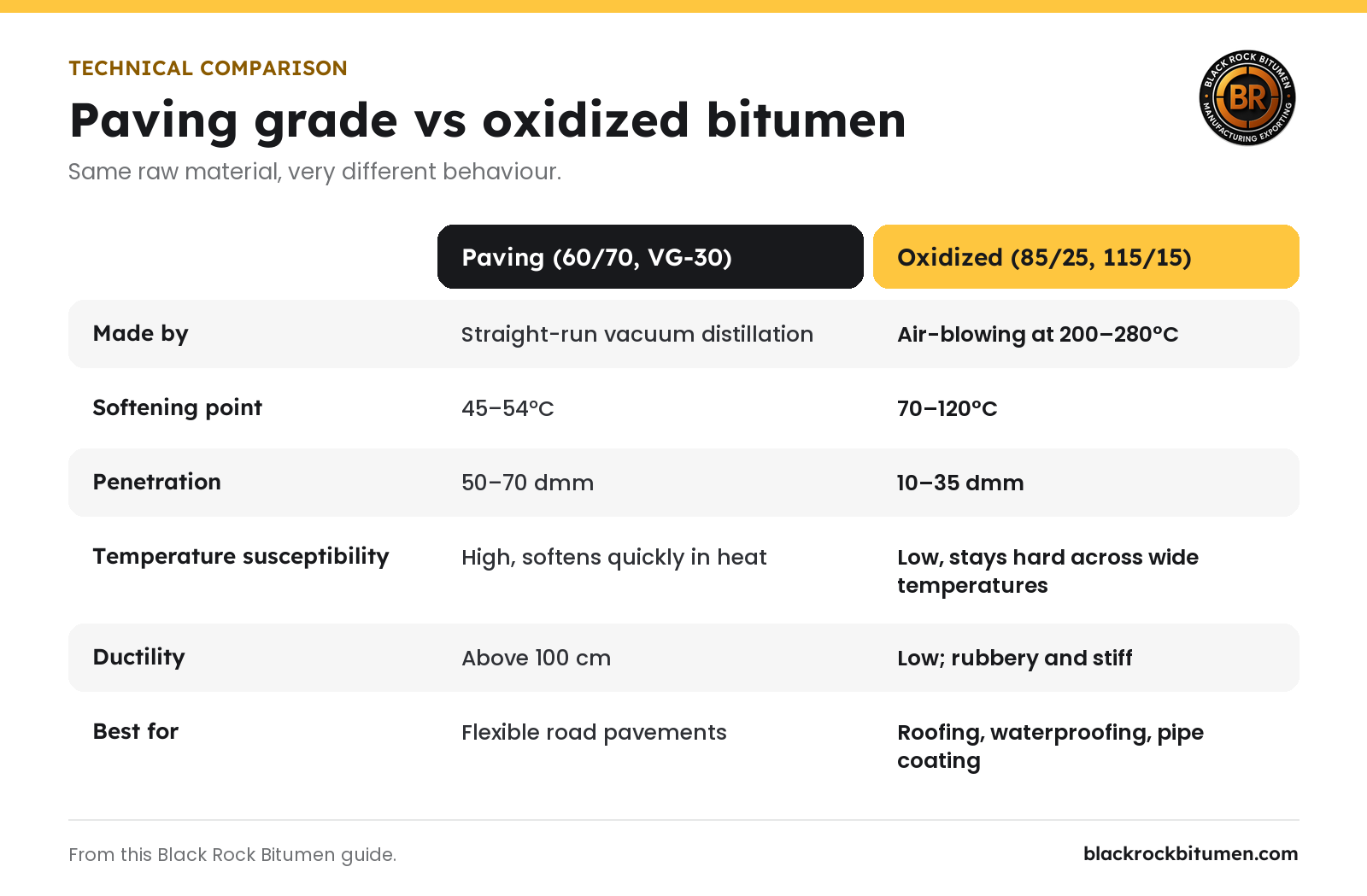
| Technical Attribute | Paving Grade Bitumen (e.g., 60/70, VG-30) | Oxidized Bitumen (e.g., 85/25, 115/15) |
| Manufacturing method | Straight-run vacuum distillation | Air-blowing / oxidation process |
| Chemical structure | High maltene-to-asphaltene ratio (sol type) | High asphaltene gel-network structure |
| Softening point | Moderate (45°C to 54°C) | High to extremely high (70°C to 120°C) |
| Penetration value | Higher (50 to 70 dmm) | Low (10 to 35 dmm) |
| Temperature susceptibility | High (softens rapidly under heat) | Low (maintains hardness across wide temperature bands) |
| Ductility / elasticity | High ductility (above 100 cm) | Low ductility; rubbery, stiff and cohesive |
| Primary suitability | Flexible road pavements under dynamic loads | Static industrial coating, waterproofing and sealing |
Practical Handling and Application Protocols
Heating and Melting Parameters
Oxidized bitumen requires application temperatures between 180°C and 230°C depending on the softening point. Overheating beyond 250°C can cause thermal cracking, breakdown of the gel structure and localized coking in heating kettles.
Packaging and Shipping
Unlike soft paving grades shipped in bulk liquid vessels, high-softening-point oxidized bitumens (such as 85/25 or 115/15) solidify at ambient temperatures. They are commonly packaged and transported in meltable plastic bags, silicone-lined cardboard boxes or polyethylene-lined drums for clean handling on job sites.
Procurement Takeaway
Paving grades and oxidized grades serve distinct engineering roles. Using soft paving grade bitumen for roofing or pipe coating results in material slumping, surface tackiness and waterproofing failures under solar heat. Conversely, using oxidized bitumen in road paving leads to severe fatigue cracking due to its low ductility. Specifying the precise softening point and penetration ratio, such as 85/25 for roofing membranes or 115/15 for pipeline enamels, supports long-term performance in industrial environments.
About the author:
Saniya Mirza
Content Writer, Black Rock Bitumen
Saniya Mirza writes the Black Rock Bitumen guides on bitumen grades, testing, storage, shipping and supply, in plain language for buyers, contractors and engineers.