Penetration Grade Bitumen — EN & ASTM Certified Supply from Dubai, UAE

Penetration grade bitumen is the most widely specified binder in road construction and asphalt paving globally. Black Rock Bitumen supplies the full range — from stiff, heavy-duty grades like 20/30 to soft, cold-climate grades like 200/300 — certified to EN 12591 and ASTM D946 standards, with export from Dubai to Africa, Asia, and the Middle East.

Whether you're procuring for a highway project, airport runway, or urban road network, we match the grade to your climate zone, traffic load, and specification requirements.

What Is Penetration Grade Bitumen?

Penetration grade bitumen is a refined petroleum derivative classified by its hardness, measured through a standard penetration test at 25°C. A needle is applied to the bitumen under a defined load for five seconds — the depth of penetration (in 0.1 mm units) determines the grade.

A lower penetration number (e.g., 20/30) means a harder, stiffer binder — preferred for high-temperature regions and heavy traffic. A higher number (e.g., 160/220) indicates a softer, more flexible product suited for cold climates or specialized applications.

This classification system — governed by EN 12591 in Europe and ASTM D946 in North America — enables engineers and procurement teams to specify the exact binder performance required for any road or industrial project.

Penetration Grade Bitumen

Standards & Grades

We reliably supply high-quality bitumen globally for road construction and industrial projects, ensuring competitive pricing and timely delivery.

EN Standard

Superior quality penetration grade bitumen which offers high performance and sustainability through the harshest climates.

ASTM Standard

It offers consistency, durability and sustainable road construction performance.

EN Standard

EN 12591 (European Standard) classifies penetration grade bitumen by its penetration value and softening point range. Black Rock Bitumen supplies all major EN grades, tested and certified for export from our Dubai logistics hub.

Bitumen 20/30

Hard binder with low penetration & high softening point. Used in high-stress pavements, industrial roads, and airport runways in hot climates. Provides rut resistance under extreme thermal and mechanical stress.

Bitumen 30/45

Firm, high-softening-point binder with a penetration of 30–45 (0.1mm at 25°C). Ideal for highways, expressways, and heavily trafficked urban roads in hot climates. Delivers consistent deformation resistance under sustained axle loads.

Bitumen 35/50

A firm, durable grade widely used in base course and binder course layers across GCC, African, South American and South Asian road infrastructure projects. Performs reliably under moderate-to-heavy traffic volumes and varying climate conditions.

Bitumen 40/60

Semi-hard grade with balanced softening point, suited for urban road construction where surface temperatures exceed 50°C. Delivers strong adhesion to aggregate and resists permanent deformation.

Bitumen 50/70

One of the most commonly specified grades globally. Suitable for wearing course and binder course in temperate to hot climates. Widely used in road construction across the UAE, East Africa, and Southeast Asia.

Bitumen 70/100

A medium-grade binder offering a balance between stiffness and flexibility. Preferred for roads with moderate traffic and climate variability — including transitional regions in Central Asia and parts of Africa.

Bitumen 100/150

Softer grades designed for cold climate applications and specialized industrial uses. Lower stiffness allows better flexibility at sub-zero temperatures, making them suitable for waterproofing membranes, cold-region road overlays, and anti-corrosion coatings.

Bitumen 160/220

Penetration 160–220 (0.1mm at 25°C) with softening point 35–43°C. Specified for cold and temperate climate road construction, surface dressing, waterproofing membranes, and industrial coating applications where low-temperature crack resistance is critical.

Need a quote? We pave the way for a great deal. 

ASTM Standard

ASTM D946 classifies bitumen at 25°C and is the dominant standard in North America and many developing markets across Asia and Africa. Black Rock Bitumen supplies the full ASTM penetration range, from ultra-stiff 10/20 to highly flexible 200/300.

Bitumen 10/20
Ultra-hard penetration grade bitumen with extreme rut resistance and a high softening point. Specified for very heavy-duty industrial roads, port pavements, and high-stress applications in hot climate regions.
Bitumen 30/40
Hard ASTM-grade binder with low penetration and strong deformation resistance. This grade is ideal for national highways, heavily congested urban roads, and high-traffic arterials in warm to hot climate zones.
Bitumen 60/70
Widely specified ASTM penetration grade globally. Semi-hard binder with a high softening point & strong aggregate adhesion. Standard grade for highway wearing courses & arterial roads in hot & warm climates.
Bitumen 60/80
Versatile mid-range binder balancing stiffness and workability. Suitable for general road pavements, urban infrastructure projects, and wearing course applications across tropical and subtropical regions.
Bitumen 80/100
This is a balanced penetration grade bitumen offering flexibility and deformation resistance. Widely used for wearing and binder courses on medium-traffic roads across tropical, subtropical, and transitional climate zones.
Bitumen 85/100
Medium-soft ASTM binder with high pliability and good low-temperature performance. Suitable for lower-traffic roads, cooler climate regions, and applications where moderate flexibility is a design requirement.
Bitumen 100/120
Soft penetration grade bitumen with low stiffness and high adaptability. Specified for cold to temperate climate road construction, flexible pavement overlays, and industrial coating applications.
Bitumen 120/150
This grade is a high-penetration soft binder engineered for extreme low-temperature environments and low-traffic rural roads. Provides crack resistance under thermal contraction in cold and sub-zero climate conditions.

Bitumen 200/300

The softest grade in the ASTM penetration range. Very high flexibility and low stiffness make it ideal for extreme cold climate applications, specialty waterproofing membranes, and industrial uses requiring maximum low-temperature pliability.
Looking for Reliable Penetration Grade Bitumen Supply?

Ready to Secure Your Next Bitumen Shipment?

Our Packaging

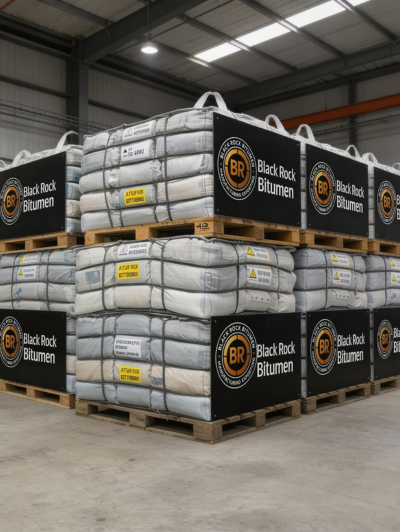
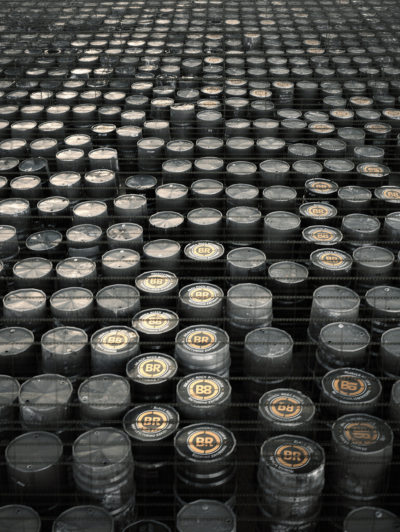
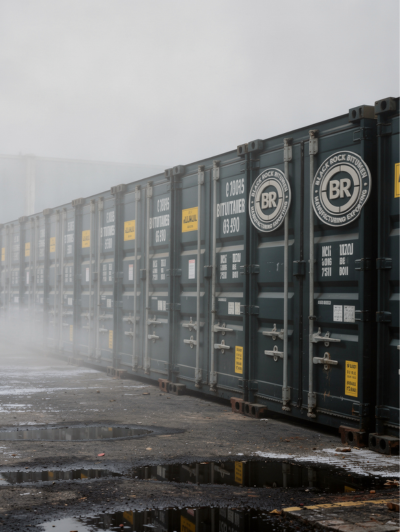
We deliver bitumen in versatile, secure options: economical Jumbo Bags, robust steel Drums, or high-volume Bulk Containers (Bitutainers/Bituboxes).

Terms of Payment

Payment Terms for Smooth Transactions

TT Method

The buyer pays 30% advance, with the balance against B/L draft (CFR) or customs docs (FOB).

LC at Sight

100% irrevocable, non-transferable, confirmed LC at sight, subject to bank approval by Black Rock Bitumen.

Get in Touch for Bitumen Orders & Inquiries

    0

    Tons Supplied

    0

    Client Retention Rate

    0

    Specialized Bitumen Grades

    0

    Successful Shipments

    Our faqs

    Frequently Asked Questions.

    Premium penetration grade bitumen offering exceptional durability, stability ideal for constructing long-lasting roads and high-quality asphalt pavements.

    Penetration grade bitumen is a refined petroleum binder classified by its hardness, measured by how deep a standard needle penetrates the material at 25°C under a 100g load for five seconds. The result — in tenths of a millimetre — defines the grade. Lower numbers indicate a harder binder; higher numbers indicate a softer one. It is the most widely used bitumen type in road construction globally.

    What is the difference between EN and ASTM penetration grade bitumen?

    Both EN 12591 and ASTM D946 classify bitumen by penetration depth at 25°C, but their acceptable value ranges, softening point limits, and complementary test parameters differ. A grade labelled 60/70 under EN and 60/70 under ASTM are not directly interchangeable. Always confirm which standard your project specification requires before placing an order to avoid non-compliance on site.

    Grades 35/50, 40/60, and 50/70 (EN) or 60/70 (ASTM) are the standard choices for hot climate road construction. Their higher softening points — typically 46–58°C — prevent rutting and deformation at pavement surface temperatures that regularly exceed 50°C in GCC, Sub-Saharan Africa, and South Asian markets. Softer grades should never be specified for these conditions.

    Grades 100/150 and 160/220 (EN) or 120/150 and 200/300 (ASTM) are specified for cold and temperate climates. Their higher penetration values and lower softening points keep the binder pliable at sub-zero pavement temperatures, preventing thermal cracking under contraction. For extreme cold environments, 160/220 or 200/300 is the correct specification.

    Bitumen 60/70 under ASTM and Bitumen 50/70 under EN are the most widely specified penetration grades globally. Both offer a balanced combination of stiffness and workability suitable for highway wearing courses across a broad range of climates. Bitumen 60/70 ASTM is also the benchmark grade used for pricing reference across international bitumen markets.

    The penetration test measures bitumen hardness by recording the depth a standard needle penetrates a bitumen sample at 25°C under a 100g load for five seconds. The depth — expressed in tenths of a millimetre — determines the grade designation. A result of 60–70 tenths of a millimetre classifies the bitumen as 60/70. The test is governed by ASTM D5 and EN 1426.

    Grade selection depends on three factors: climate zone (hot climates need harder grades; cold climates need softer grades), traffic load (heavy axle loads require lower penetration grades for rut resistance), and project specification (EN or ASTM standard). Black Rock Bitumen's technical team assists procurement managers and site engineers in confirming the correct grade before order placement.

    Penetration grade bitumen is classified by needle penetration depth at 25°C — a measure of hardness at ambient temperature. Viscosity grade bitumen is classified by its flow resistance at 60°C and 135°C — a measure of performance at operating temperatures. Viscosity grading is more widely used in India (IS 73) and North America, while penetration grading remains the dominant system across GCC, Africa, and Europe.

    Yes. Softer penetration grades — specifically 100/150, 160/220 (EN), and 200/300 (ASTM) — are used in bituminous waterproofing membranes for roofing, bridge decks, underground structures, and buried pipelines. Their high flexibility and low stiffness allow the membrane to remain crack-resistant across wide temperature ranges without becoming brittle in cold conditions.

    Black Rock Bitumen supplies penetration grade bitumen in new steel drums (180 kg), jumbo bags, bitutainers (liquid-tight ISO containers), and bituboxes for bulk shipments. Packaging selection depends on destination port infrastructure, project volume, and unloading method. Contact our team at sales@blackrockbitumen.com for packaging recommendations based on your specific shipment requirements.

    Every shipment from Black Rock Bitumen includes a Certificate of Analysis (CoA) confirming compliance with EN 12591 or ASTM D946, a Material Safety Data Sheet (MSDS), and a full packing list. Third-party laboratory test reports from accredited testing facilities are available on request and recommended for projects with strict import or government specification requirements.

    Yes. Black Rock Bitumen exports the full EN and ASTM penetration grade range from our Dubai logistics hub via Jebel Ali Port to infrastructure contractors and EPC companies across Africa, the Middle East, and Asia. Active export markets include the UAE, GCC states, Algeria, Angola, Cameroon, Botswana, Burkina Faso, and multiple Asian markets. Contact us for freight and lead time details.