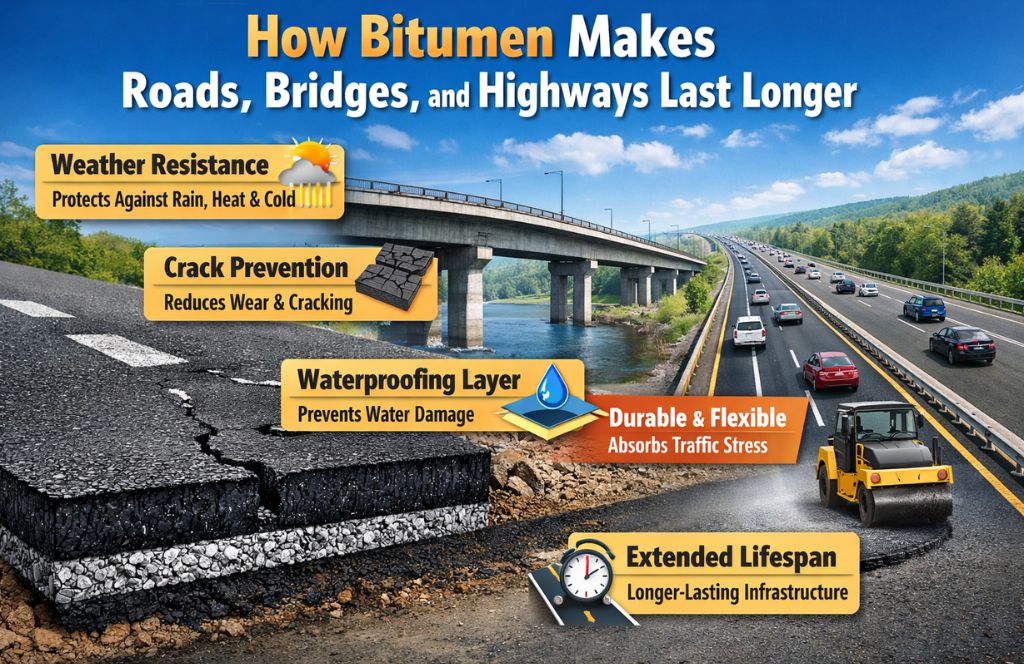
Modern infrastructure depends heavily on penetration-grade bitumen to build surfaces that can handle traffic, weather, and time. From city streets to national highways, the quality of materials used in bitumen supply for road construction plays a major role in how long these structures perform without major repairs.
When governments and contractors invest in the right grade of bitumen and proper application methods, roads and bridges can last for decades with minimal maintenance. Black Rock Bitumen focuses on supplying tested and export-ready bitumen products that support long-lasting infrastructure across global markets.
Key Takeaways
- Bitumen improves durability, flexibility, and water resistance in roads and bridges
- Proper grade choice influences long-term surface performance.
- Climate and traffic volume influence bitumen choice
- When mixed and applied properly, lifespan is extended.
- Consistent quality can be achieved through reliable sourcing.
What Is Bitumen and Why Is It Important?
Bitumen is a thick, black, sticky material derived from crude oil refining. It serves as a binding material in asphalt unifying sand and stone to create smooth and robust road surfaces.
It is important because of its special properties:
- Waterproof nature that prevents water from penetrating the surface
- Flexibility that allows surfaces to expand and contract
- Strong adhesive quality that binds aggregates firmly
- Resistance to wear caused by heavy vehicles
Without bitumen, modern highways and bridge decks would crack, erode, and deteriorate far more quickly.
How Bitumen Extends the Life of Roads

1. Flexibility Under Pressure
Roads constantly expand in heat and contract in cold weather. Bitumen adapts to these changes without breaking. This flexibility minimizes cracks and the surface damage.
2. Water Damage Protection
One of the largest threats to road infrastructure is water. When the pavements absorb water, it loosens the structure. Bitumen creates a protective barrier that blocks water penetration.
3. Resistance to Heavy Traffic
Highways and bridges carry thousands of vehicles daily, including heavy lorries. Properly selected bitumen grades help surfaces resist deformation and rutting.
4. Simple Maintaining and Resurfacing
Bitumen surfaces can be reheated and recycled. This enhances its cost-efficiency in the long run in terms of maintenance.
Types of Bitumen Used in Infrastructure
Different projects require different bitumen grades. Choosing the correct type is essential for longevity.
| Type of Bitumen | Main Use | Key Benefit |
| Penetration Grade | Highways and main roads | Balanced flexibility and strength |
| Viscosity Grade | Heavy traffic areas | Better performance in high temperatures |
| Oxidised Bitumen | Roofing and waterproofing | High durability and resistance |
| Bitumen Emulsion | Surface dressing and cold application | Easier handling and safer application |
Penetration Grade Bitumen
Penetration grade bitumen is widely used in road construction. It is categorized according to hardness levels and it is effective in moderate climatic conditions.
1. Bitumen Emulsion
A bitumen emulsion supplier provides this product for cold mix applications. It is used in maintenance and surface sealing.
2. Oxidised Bitumen
Also known as oxidized bitumen, this type is produced by blowing air through heated bitumen. It is also commonly applied in industrial waterproofing and bridge protection coatings.
3. Bitumen Viscosity
The level of bitumen viscosity determines how the material flows at different temperatures. The right viscosity will provide a good coating of the aggregates and stability of the surface in the long run.
Why Quality Bitumen Supply Matters
Not all bitumen performs the same way. Stability in manufacturing and testing guarantees the longevity of roads.
When working with experienced Bitumen Suppliers, contractors benefit from:
- Consistency in quality of shipments.
- Proper packaging for export
- Laboratory-tested grades
Technical specifications aligned with global standards
This level of control helps prevent early surface failures.
Bitumen in Bridges and Highways
Bridges require extra protection due to constant exposure to wind, water, and load stress. Bitumen layers act as protective membranes between structural elements and traffic surfaces.
Key advantages include:
- Avoiding corrosion of steel components.
- Reducing vibration impact
- Enhancing load distribution.
- Extending deck lifespan
Highways benefit in similar ways. Strong bonding between aggregates reduces potholes and cracking.
Factors That Affect Road Longevity
Several conditions determine how long a bitumen road will last:
- Climate and temperature range.
- Traffic volume and vehicle weight.
- Base layer preparation
- Correct mixing ratios
- Application techniques
Even high-grade bitumen must be applied correctly to deliver maximum lifespan.
When you are considering a high-scale infrastructure project, it is possible to save long-term repair expenses by choosing the appropriate grade of material at the beginning. It is possible to consult with experienced suppliers to make the right choice.
The Role of Global Supply in Infrastructure Projects
Major infrastructure projects need sound logistics and bulk export services. Black Rock Bitumen focuses on supplying penetration grade, viscosity grade, and specialised bitumen products to contractors worldwide.
International buyers seek:
- Timely shipment
- Consistent drum or bulk packaging
- Verified product specifications
- Transparent documentation
This reliability facilitates the smooth running of the projects. In the case of highways or bridge construction, the consistency of the product quality may be very useful to enhance the durability of the surface.
Long-Term Cost Benefits of Bitumen Roads
Although high-quality bitumen Supply for road construction may require a larger upfront investment, the long-term savings are substantial.
- Fewer repairs over time
- Less frequent maintenance.
- Lower resurfacing costs
- Improved road safety
- Longer service life
Governments prefer asphalt roads due to its recyclability and cost efficiency.
Conclusion
Bitumen plays a central role in building strong roads, bridges, and highways. Its ability to be flexible, waterproof, and resistant to heavy traffic is a necessity in long-lasting infrastructure. The appropriate grade may significantly increase surface life by choosing suppliers with experience.
Black Rock Bitumen supports global infrastructure projects by supplying tested and export-ready bitumen grades for construction needs. Contractors can use reliable sourcing partners to construct roads that benefit communities over several years.
In case you have a road or bridge project, make sure that you look through your material specifications and that your supplier delivers a consistent quality. A correct decision nowadays can prolong the infrastructure life for several decades.

Content Writer, Global Bitumen Supply & Market Insights, Black Rock Bitumen
Farheen Fatima is an infrastructure materials writer specializing in bitumen supply, asphalt technology, and global road construction. He shares practical insights on bitumen grades, supplier evaluation, and international standards to help contractors and project teams make informed procurement decisions.