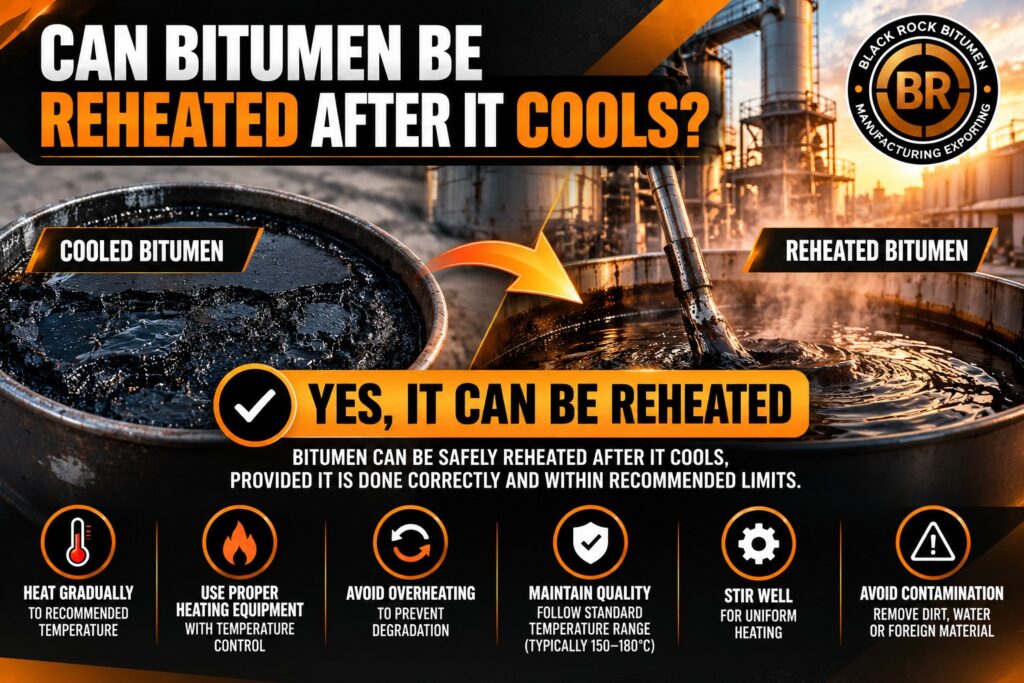
Yes — unmodified paving bitumen can be reheated after it cools, and doing so is normal practice. Bitumen is thermoplastic: it softens when heated and hardens when cooled, and that cycle can be repeated.
But “can you” is the easy half of the question. The harder half is what each cycle costs, because every hour the binder spends hot ages it a little, and that change is permanent. Reheat a load twice and you will probably never notice. Reheat the same tank repeatedly over a season, or hold it hot between jobs, and you can end up with a material that no longer meets the grade you bought.
Black Rock Bitumen supplies binders to contractors whose material sometimes sits through a delay, a wet spell or a shutdown, so this comes up often. This guide covers the answer for each product type, what the cycles actually cost, how to reheat without making it worse, and how to prove the material is still compliant afterwards.
Key takeaway: unmodified bitumen reheats freely within the limits for its grade. Polymer-modified bitumen reheats with more care, because the polymer network degrades faster than the base binder. Emulsions should not be reheated above about 85 °C at all, and a broken emulsion cannot be recovered. In every case, what matters is not the number of reheats but the total time spent hot.
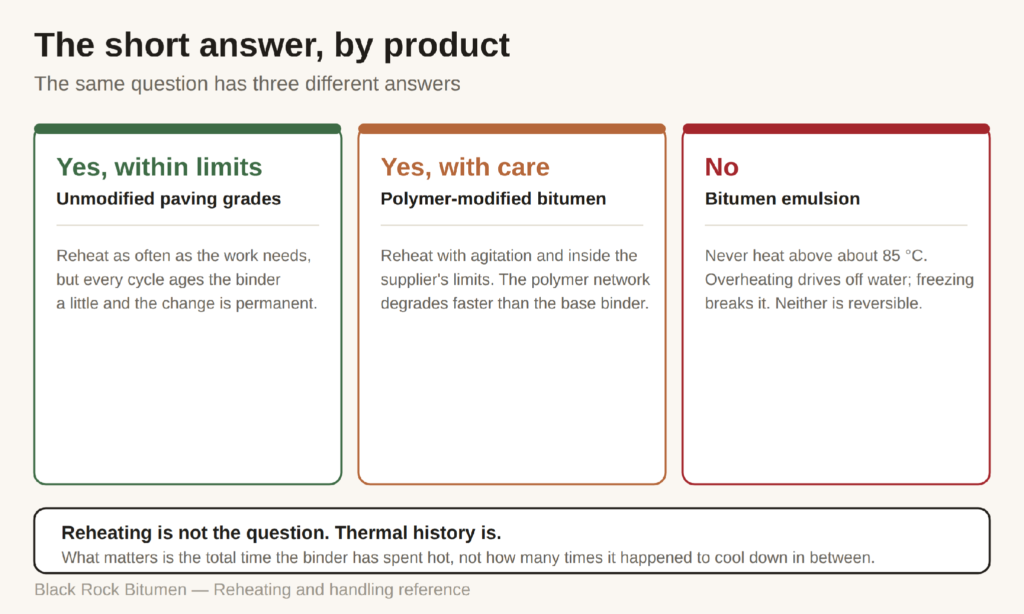
Figure 1. Three products, three answers. The distinction that matters is whether the material is a binder, a modified binder or an emulsion.
Alt text: Whether each product can be reheated: yes for unmodified bitumen within limits, with care for polymer-modified bitumen, and no for emulsions.
The Answer Depends on What You Have
Unmodified Paving Grades: Yes
A 60/70 or VG-30 binder that has cooled in a drum or tank can be brought back up and used. The material has not changed state in any irreversible way; it has simply become very viscous. Reheat it slowly and evenly, keep within the maximum for the grade, and it will behave as it should. Eurobitume gives 200 °C as the maximum safe handling and storage temperature for paving and air-rectified bitumen, and most grades have their own lower working maximum on the data sheet.
Polymer-Modified Bitumen: Yes, With More Care
PMB reheats, but it is less forgiving in two ways. The polymer network that gives it its elasticity degrades at high temperature faster than the base bitumen does, and static storage lets the polymer separate from the binder. So a PMB that has been reheated needs agitation restored, and it should be held within the supplier’s stated range rather than the general industry ceiling.
There is laboratory evidence for the difference. In a study of overheating, unmodified 50/70, 35/50 and 20/30 binders held for an hour at 200 °C and even 250 °C showed almost no change in softening point — but polymer-modified binders held at 300 °C lost 10 °C or more of softening point, which the authors attribute to failure of the SBS polymer network. The base binder is robust to short excursions; the polymer in it is not. Our guide to how SBS and EVA are blended into bitumen explains why that network is the thing you actually paid for.
Bitumen Emulsion: No
An emulsion is not a binder that has cooled; it is bitumen droplets dispersed in water, held apart by an emulsifier. Heating it drives off the water and changes the product irreversibly. The Asphalt Emulsion Manufacturers Association advises storing emulsions between about 10 °C and 85 °C and never heating above 85 °C. Freezing does equivalent damage from the other direction: it breaks the emulsion and leaves two layers in the tank, neither of which is suitable for the intended use.
So for emulsions the honest answer is that there is nothing to reheat. If the product has thickened from water loss, or separated from freezing, the question is not how to warm it but whether it can be used at all — and usually it cannot.
Cutback Bitumen: Technically Yes, Practically Careful
Cutback contains a petroleum solvent, and heating drives that solvent off, which changes the viscosity and lowers the flash point of what remains. Reheating is possible within the supplier’s stated limits, but it is a fire-safety matter as much as a quality one, and the material should be kept well below its flash point at all times.
What Each Reheat Actually Costs
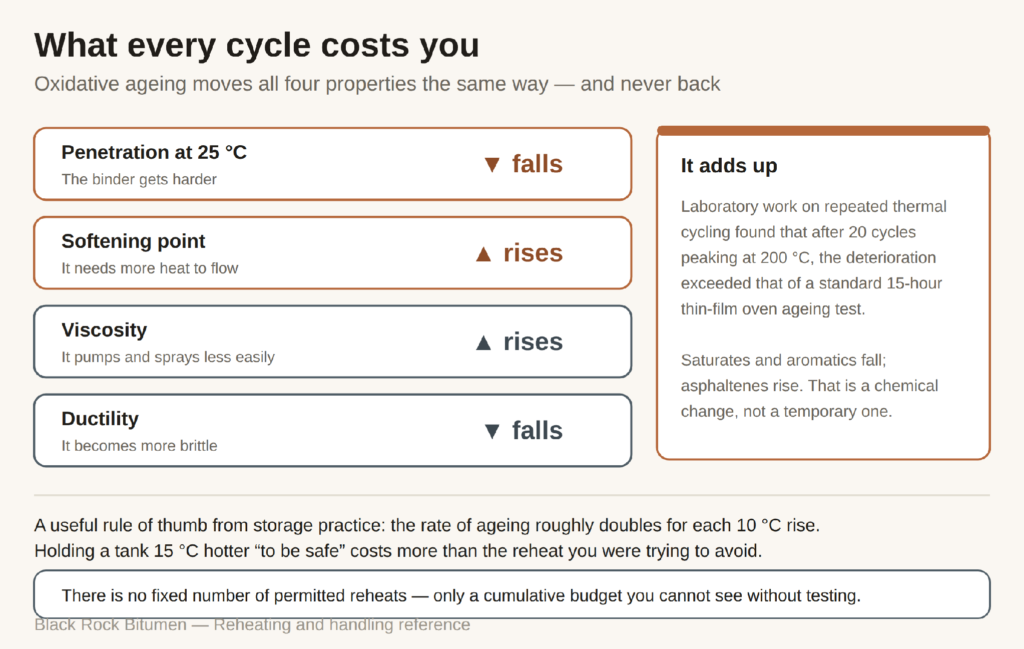
Figure 2. Every heating cycle moves the same four properties in the same direction. The change is chemical and cumulative, not something that reverses on cooling.
Alt text: What each heating cycle costs: penetration falls, softening point rises, viscosity rises and ductility falls, cumulatively and permanently.
Reheating does not damage bitumen by melting it. It damages it by oxidising it. At high temperature the lighter fractions react with oxygen and the chemistry shifts: saturates and aromatics decrease, asphaltenes increase, and the binder gets harder.
| Property | Direction of change | What you notice |
|---|---|---|
| Penetration at 25 °C | Falls | The binder is harder than the certificate says |
| Softening point | Rises | It needs more heat to reach working viscosity |
| Viscosity | Rises | It pumps, sprays and coats less easily |
| Ductility | Falls | It is more brittle, with less strain tolerance |
The important word is cumulative. Each cycle adds to the last, and nothing reverses on cooling. Research on repeated thermal cycling found that after 20 cycles peaking at 200 °C, the deterioration in the binder exceeded the effect of a standard 15-hour thin-film oven ageing test — which is the laboratory procedure designed to simulate everything the binder goes through during mixing and laying.
This is also why the framing of the original question is slightly wrong. There is no fixed number of permitted reheats. A binder that was reheated three times in a week, briefly and at controlled temperature, may be in better condition than one that was never reheated at all but sat at 180 °C for a fortnight. What counts is total time at temperature, and the temperature it was held at.
The Rule of Thumb Worth Remembering
Storage practice commonly assumes that the rate of ageing roughly doubles for each 10 °C increase in temperature. Whether or not that holds precisely for a given binder, the direction of the advice is sound and it has a practical consequence: holding a tank hotter than necessary “so it is ready” costs more in ageing than the reheat it was meant to avoid. Our guide to storage and handling mistakes covers the tank-side practices in more detail.
How to Reheat Without Making It Worse
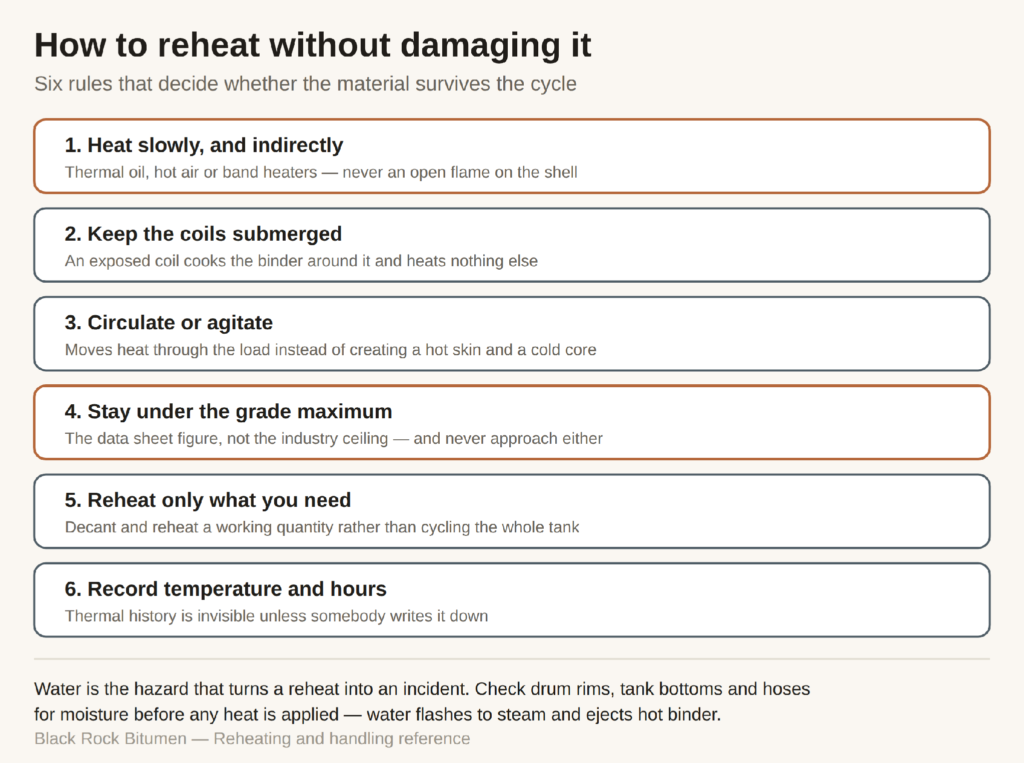
Figure 3. Six rules. Numbers one and four are the ones most often broken when a crew is under time pressure.
Alt text: Six rules for reheating bitumen correctly: heat slowly and indirectly, keep coils submerged, circulate, stay under the grade maximum, reheat only what you need, and record it.
- Heat slowly and indirectly. Thermal oil, hot air or electric band heaters — never an open flame against a drum or tank shell, which scorches the binder against the steel.
- Keep heating coils submerged. An exposed coil overheats the binder immediately around it and heats nothing else.
- Circulate or agitate where the equipment allows, so heat moves through the load instead of creating a hot skin over a cold core.
- Stay under the maximum for the grade — the figure on the data sheet, not the general industry ceiling — and do not approach either.
- Reheat only what you need. Decanting and reheating a working quantity is better than cycling a whole tank for a partial draw.
- Record the temperature and the hours. Thermal history is invisible unless somebody writes it down, and it is the only way to know how much budget you have left.
One safety point overrides all six. Water is what turns a routine reheat into an incident: it flashes to steam inside hot bitumen and ejects material violently. Check drum rims, tank bottoms, hoses and any condensate before heat is applied, and stop immediately if a load foams, bubbles or rises. Eurobitume publishes safe handling guidance covering this and the other thermal hazards, and our guide to why bitumen will not pour covers what to do when the material will not move at all.
Proving the Reheated Material Is Still on Specification
If a load has been through several cycles, or has been held hot for a long period, the question stops being theoretical. Two tests answer it, and both are routine.
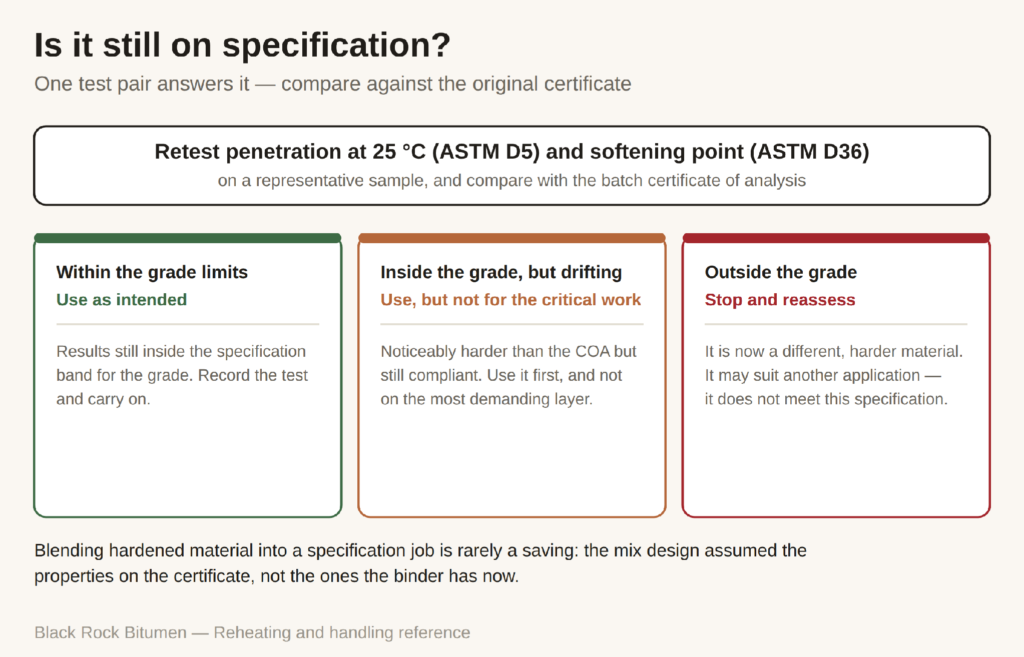
Figure 4. Two tests and the original certificate settle the question. The middle outcome — compliant but drifting — is the one worth acting on early.
Alt text: Decision chart for reheated bitumen: retest penetration and softening point against the certificate of analysis, then accept, restrict or reject the material.
| Test | Method | What it tells you |
|---|---|---|
| Penetration at 25 °C | ASTM D5 / D5M, or EN 1426 | How much harder the binder has become since it was certified |
| Softening point | ASTM D36 / D36M, or EN 1427 | How far the consistency has shifted at high temperature |
| Viscosity | ASTM D4402 (rotational) or D2171 | Whether it still pumps and coats within specification |
| Ductility | ASTM D113, where the specification requires it | Whether brittleness has increased |
The comparison that matters is not against a general table but against the batch certificate of analysis for that material. A penetration of 58 means little on its own; a penetration of 58 against a certificate that said 66 tells you exactly how much thermal history the binder has accumulated.
Three outcomes follow. If the results are still inside the grade limits, record the test and use the material as intended. If they are inside the limits but noticeably drifted, use that material first and keep it off the most demanding layer. If they are outside the limits, it is no longer the grade you bought — it may suit a different application, but it does not meet this specification, and blending it into a specification job rarely saves what it costs.
For the wider set of checks on incoming and stored material, see our guide to testing bitumen quality before purchase.
What to Do With Material That Has Aged Too Far
Overheated or over-cycled bitumen is not waste, but it is no longer the product on the order. The options, in rough order of value:
| Option | When it works | What to check first |
|---|---|---|
| Use on a less demanding application | The binder is harder but consistent and uncontaminated | Retest and treat it as whatever grade it now is, not what it was |
| Blend with softer virgin binder | Only where the specification and the designer allow it | Test the blend, not the components; get the agreement in writing |
| Use in a lower-specification layer or works | Base or regulating layers where the requirement is less demanding | That the governing specification actually permits the grade |
| Return or claim against the supplier | Where the material arrived degraded rather than aged on your site | Delivery temperature records, the COA and the shipping documents |
| Dispose of it properly | Contaminated, water-affected or unidentifiable material | Local waste regulations; bitumen is not a general waste stream |
Two cases deserve a firmer line. Water-contaminated material should not be reheated at all until the supplier has advised, because the hazard is immediate rather than a quality question. And separated PMB that will not redisperse with agitation has lost the property it was bought for, so treating it as an unmodified binder of equivalent hardness is more honest than hoping.
If you are unsure which of these applies, send us the original certificate, the retest results and the temperature record, and we will help you read them — get in touch here.
How to Need Fewer Reheats
- Order to the programme rather than to the truckload, so material is not sitting hot waiting for a window.
- Store at the lowest temperature that still allows safe pumping, rather than keeping tanks at working temperature around the clock.
- Let material cool rather than holding it hot over a long shutdown — one controlled reheat costs less than a week at temperature.
- Keep grades in separate tanks so a partial draw does not require reheating a mixed load.
- Agitate PMB on a schedule from the day it arrives, not when a problem appears.
- Log tank temperatures and hours so that thermal history is visible before it becomes a test failure.
The counterintuitive one is the third. Crews often keep a tank hot through a delay because reheating feels like the damaging event. For unmodified binder, in most cases, the opposite is true: a controlled cool-down and a single careful reheat does less harm than days of continuous heat.
Getting Material That Can Take It
Black Rock Bitumen supplies penetration grade bitumen, viscosity grades to IS 73, performance grades, polymer-modified bitumen and bitumen emulsions from Dubai, each with a batch certificate of analysis and a safety data sheet stating the grade, the governing standard and the recommended handling and storage temperatures.
That certificate is what makes the reheating question answerable later: without a baseline, a retest tells you what the binder is but not how far it has moved. For choosing the grade in the first place, see our bitumen grade selection guide.
Frequently Asked Questions
Can bitumen be reheated after it cools? Yes, for unmodified paving grades. Bitumen is thermoplastic, so it softens on heating and hardens on cooling, and the cycle can be repeated. Each cycle ages the binder slightly and permanently, so the practical limit is the total time spent hot rather than the number of reheats.
How many times can bitumen be reheated? There is no fixed number. A binder reheated several times briefly and at controlled temperature can be in better condition than one held hot continuously for days. What counts is cumulative time at temperature, which is why the answer has to come from testing rather than a count.
Does reheating damage bitumen? Reheating itself does not; oxidation at high temperature does. Penetration falls, softening point and viscosity rise, and ductility falls. The changes are chemical and do not reverse on cooling.
Can bitumen emulsion be reheated? No. Emulsions should be stored between about 10 °C and 85 °C and never heated above 85 °C, because the water evaporates and the product changes irreversibly. Freezing likewise breaks the emulsion into two layers that cannot be recombined.
Can polymer-modified bitumen be reheated? Yes, but with more care than unmodified binder. The polymer network degrades faster than the base bitumen at high temperature, and static storage lets the polymer separate, so PMB needs agitation and the supplier’s own temperature limits.
What temperature should I reheat bitumen to? To the working temperature for the grade — typically around 140–160 °C for paving grades and 160–185 °C for PMB — and never above the maximum on the product’s data sheet. Eurobitume gives 200 °C as the absolute safe handling ceiling for paving and air-rectified bitumen.
How do I know if reheated bitumen is still usable? Retest penetration at 25 °C and softening point on a representative sample and compare the results with the original batch certificate of analysis. Inside the grade limits, use it; outside them, it is a different material and no longer meets the specification.
Is it better to keep bitumen hot or let it cool and reheat? For unmodified binder, letting it cool and carrying out one controlled reheat usually causes less ageing than holding a tank at working temperature for days. Ageing accelerates with both time and temperature, so continuous heat is rarely the cheaper option.
The Bottom Line
Bitumen can be reheated. That is a property of the material, and it is why the same tank can serve several jobs. What cannot be reheated is the thermal history: every hour at temperature is spent, and the binder does not get it back.
So the useful discipline is not counting reheats. It is heating slowly and indirectly, staying under the grade’s maximum, keeping material hot only while it is needed, writing down what happened — and testing against the original certificate when a load has been through more than its share.