


No products in the cart.
- Blog
- Supply & procurement
- How to Pick the Best Bitumen Supplier for Global Needs
How to Pick the Best Bitumen Supplier for Global Needs
Supply & procurement

Farheen FatimaBlack Rock Bitumen · Dubai, UAE
4 min read

Table of contents
- How to Choose the Right Bitumen Supplier for Your International Projects
- 1. Know Exactly What Type of Bitumen You Need
- 2. Make Sure Your Supplier Knows International Shipping Inside Out
- 3. Demand Proof of Quality—Every Single Time
- 4. Don’t Underestimate Packaging—It Can Make or Break Your Shipment
- 5. Delivery Timelines Matter—Late Shipments Can Derail Your Project
- 6. Pricing Should Be Transparent—No Surprises
- 7. After-Sales Support Is Non-Negotiable
- 8. Check Their Track Record—Don’t Just Take Their Word for It
- 9. The Best Suppliers Offer More Than Just Product—They Offer Solutions
- Final Thought: Your Supplier Should Be a Partner, Not Just a Vendor
3. Demand Proof of Quality—Every Single Time
You wouldn’t buy a car without test-driving it, right? The same goes for bitumen. If your supplier can’t provide quality certifications, walk away.
A trustworthy supplier will always give you:
- A Certificate of Analysis (COA) for each batch
- Third-party lab reports (SGS, Intertek, Bureau Veritas)
- Compliance with international standards
- The option to inspect their facility (in person or via video)
Never skip this step: Always review a sample COA before placing a big order.
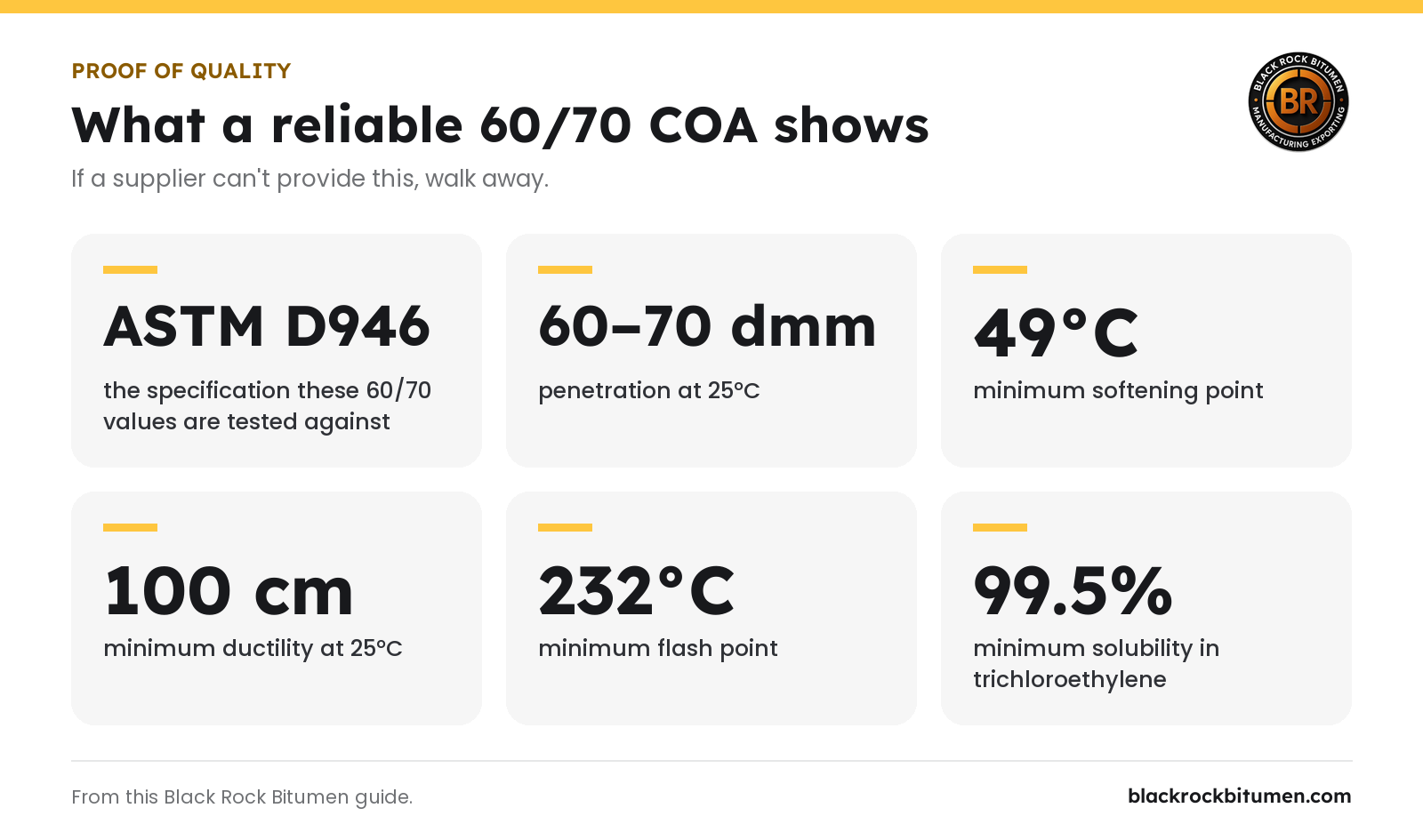
What a Reliable COA Looks Like (60/70 Bitumen Example)
| Property | Specification (ASTM D946) |
|---|---|
| Penetration @ 25°C | 60–70 dmm |
| Softening Point (°C) | Min. 49 |
| Ductility @ 25°C (cm) | Min. 100 |
| Flash Point (°C) | Min. 232 |
| Solubility in Trichloro | Min. 99.5% |
If they can’t provide this, they’re not worth your time.
4. Don’t Underestimate Packaging—It Can Make or Break Your Shipment
I’ve seen bitumen arrive hardened, contaminated, or even leaking because the wrong packaging was used. The right choice depends on your climate and transit time.
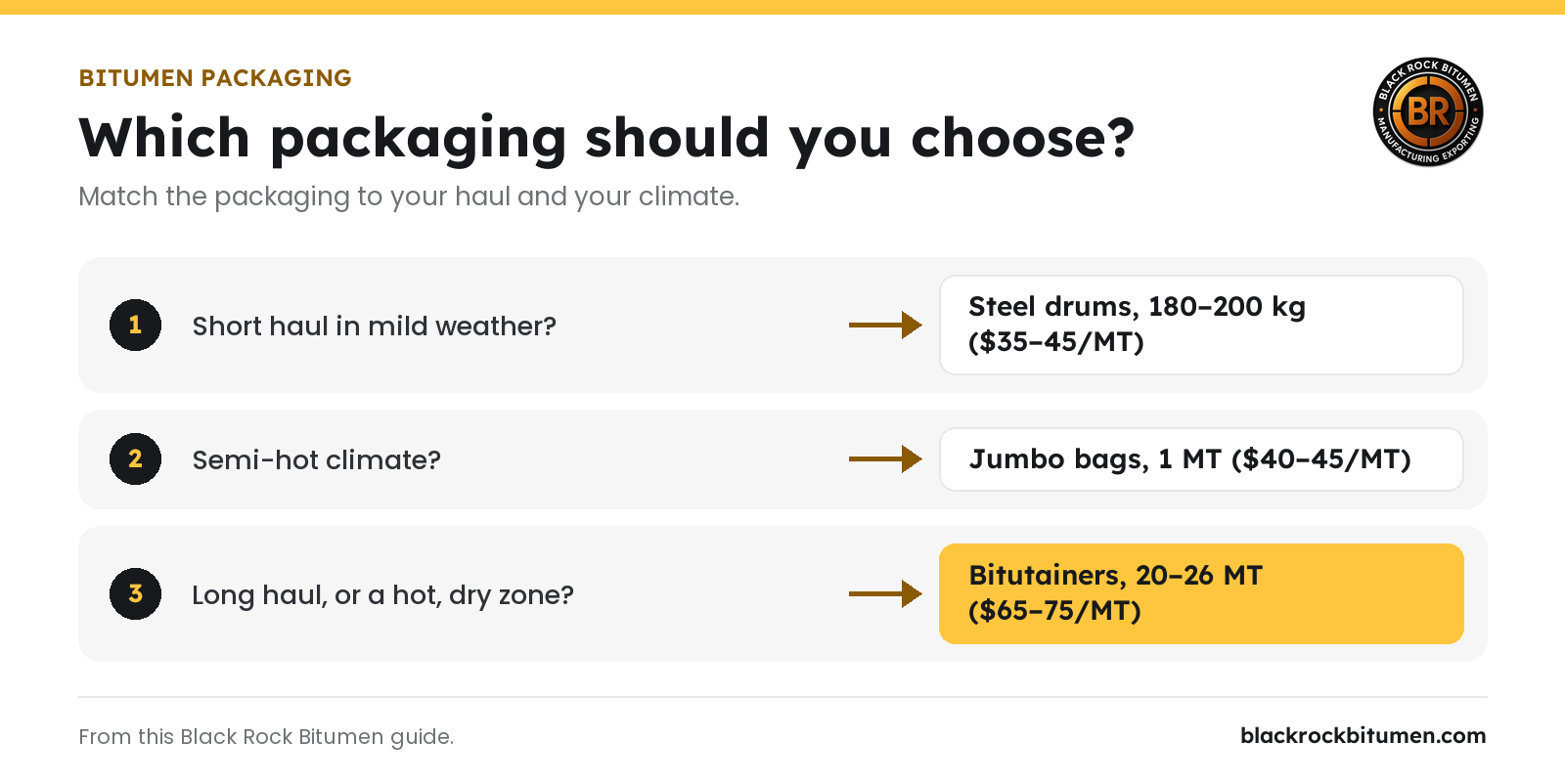
Which Packaging Should You Choose?
| Packaging Type | Capacity | Best for | Heat Resistance | Cost/MT (Avg) |
|---|---|---|---|---|
| Steel Drums | 180–200 kg | Short hauls, mild weather | $35–45 | |
| Jumbo Bags | 1 MT | Semi-hot climates | $40–45 | |
| Bitutainers | 20–26 MT | Long hauls, hot/dry zones | $65–75 |
A good supplier won’t just sell you what’s convenient for them—they’ll recommend the best option for your specific needs.
5. Delivery Timelines Matter—Late Shipments Can Derail Your Project
Nothing’s worse than having your construction team ready to go… and your bitumen stuck at a port. Delays cost money and damage your reputation.
Your supplier should:
- Guarantee a clear delivery window (e.g., 20–25 days)
- Avoid risky transshipments or congested routes
- Provide live tracking so you’re never left guessing
Ask them:
- “How long does shipping usually take to my port?”
- “Which shipping lines do you work with?”
- “Can you do partial shipments if I’m in a rush?”
If they’re vague, consider it a warning sign.
6. Pricing Should Be Transparent—No Surprises
Ever received an invoice with unexpected fees? With bitumen, hidden costs can blow your budget. A reputable supplier breaks down every charge upfront.
They should clearly explain:
- Base price vs. freight vs. packaging costs
- Your Incoterm options (FOB, CFR, CIF)
- Payment methods (LC, TT, advance)
Watch out for: Suppliers who keep changing prices mid-negotiation or avoid giving detailed quotes.
7. After-Sales Support Is Non-Negotiable
Mistakes happen—but a good supplier fixes them fast. If something goes wrong, you need a team that responds quickly, not one that disappears after getting paid.
Look for:
- A dedicated account manager
- 24–48 hour response times
- Clear policies for replacements/refunds
If they brush off your concerns during the sales process, imagine how they’ll handle a real issue.
8. Check Their Track Record—Don’t Just Take Their Word for It
Would you hire a contractor without checking their past work? The same logic applies here.
Always ask for:
- Client testimonials (written or video)
- Examples of past projects (especially government or large-scale)
- Proof of certifications (ISO, CE, etc.)
Red flags:
- No photos of past shipments
- No verifiable clients
- Pushy sales tactics
9. The Best Suppliers Offer More Than Just Product—They Offer Solutions
A great supplier doesn’t just sell bitumen—they help you succeed. Look for value-added services like:
- Custom grade recommendations
- Container loading photos for verification
- Seasonal shipping advice (e.g., avoiding monsoon delays)
- Technical support for handling and application
When you find a supplier like this, hold onto them—they’re worth their weight in gold.
Final Thought: Your Supplier Should Be a Partner, Not Just a Vendor
Choosing the right bitumen supplier isn’t just a one-time decision—it’s the foundation of a long-term partnership. The right supplier will help you avoid delays, ensure quality, and keep your projects running smoothly.
So take your time, ask the tough questions, and don’t settle for anything less than reliability. Your future self will thank you.
Now, go find that perfect supplier—your next project depends on it!
About the author:
Farheen Fatima
Content Writer, Global Bitumen Supply & Market Insights, Black Rock Bitumen
Farheen Fatima is an infrastructure materials writer specializing in bitumen supply, asphalt technology, and global road construction. Farheen shares practical insights on bitumen grades, supplier evaluation, and international standards to help contractors and project teams make informed procurement decisions.